AI for Personalized Home Styling: A Simple Workflow

How AI Fits Into Personalized Home Styling (Without Replacing Your Judgment)
AI styling tools are especially useful when inspiration feels scattered: one screenshot is airy minimal, the next is moody vintage, and suddenly nothing matches. With the right inputs, AI can turn those mixed signals into a practical, room-by-room direction that supports how the space is actually used—morning routines, movie nights, kids’ play, work-from-home days, and everything in between.
The most reliable way to use AI is to treat it like a fast visual brainstorming partner. It can generate options quickly, but the final choices should still factor in real dimensions, comfort, durability, and budget.
What AI Can (and Can’t) Do for Home Styling
- Creates fast visual variations for layouts, color palettes, and decor directions.
- Helps narrow choices when preferences feel inconsistent or overwhelming.
- Suggests cohesive combinations (materials, finishes, shapes) across rooms.
- Cannot measure a room perfectly without accurate inputs; results improve with real dimensions and photos.
- Works best as a decision-support tool: final choices should consider comfort, durability, and budget.
A helpful mental model: AI is great at “show me possibilities,” while you’re responsible for “will this function in my home?” For example, an AI concept might place a chair beautifully—yet in real life it could block a door swing or create a tight walkway.
Set a Clear Goal Before Generating Ideas
Before you generate anything, pick one primary goal for the room. A single goal keeps results consistent and prevents endless regenerating.
- Choose one primary room goal: calmer, brighter, more storage, more seating, or more personality.
- Define non-negotiables: keep/replace items, kid/pet needs, rental-friendly limits, and budget range.
- Collect 8–12 reference images with consistent signals (similar wood tones, repeated colors, or repeated silhouettes).
- Decide the vibe in plain language: “warm modern,” “minimal but cozy,” “gallery-like,” or “soft industrial.”
If you’re unsure what your references “say,” scan them for repeats: do they lean warm (cream, camel, oak) or cool (gray, bright white, chrome)? Do you see curved silhouettes, low profiles, or lots of black accents? Those repeats are your styling spine.
Color choices also become easier when you use basic color relationships (warm/cool undertones, complementary accents). A quick refresher on how palettes behave can help when AI suggestions feel slightly “off”; see Britannica’s overview of color theory.
Gather Inputs That Make AI Results Look Real
Better inputs lead to better outputs. If you want AI concepts that translate into a shoppable plan, give it the same information a designer would ask for.
Lighting is a common culprit when AI rooms look “better” than reality. If your room relies on one overhead fixture, even the best layout will feel flat at night. Upgrading to layered lighting and efficient bulbs can change the mood dramatically; the U.S. Department of Energy’s LED lighting guide is a solid reference for practical bulb basics.
A Simple AI Styling Workflow: Generate → Compare → Refine
From AI Inspiration to Real-World Decisions
| Step | What to Generate | What to Decide Offline | Common Pitfall to Avoid |
|---|---|---|---|
| 1. Layout | 2–3 furniture arrangements | Traffic flow and clearances | Blocking doorways or vents |
| 2. Palette | Neutral base + 1–2 accents | Paint samples and undertones | Too many competing accent colors |
| 3. Materials | Wood/metal/textile mix | Durability and cleaning needs | Choosing delicate fabrics for high-use zones |
| 4. Lighting | Layered lighting examples | Bulb temperature and placement | Relying on a single overhead light |
| 5. Finishing | Art, pillows, styling vignettes | Scale and spacing on walls/shelves | Overcrowding surfaces |
Modern Home Design Basics AI Can Help Balance
If a room feels visually busy, it’s often because everything is competing for attention. The idea of visual hierarchy applies to interiors too: one clear focal point, supported by quieter elements. For a quick, practical explanation of how hierarchy works, see Nielsen Norman Group’s guide to visual hierarchy.
Easy Styling Tips That Make Any AI Plan Look Finished
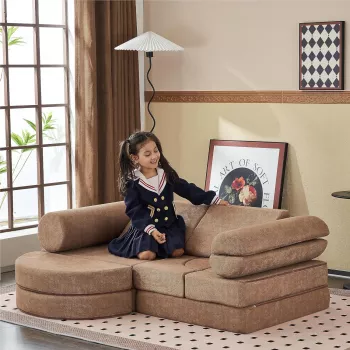
When you’re styling for real life—especially with kids—prioritize a layout that protects open floor space. A flexible seating setup can support both “grown-up” lounging and playtime zones. If you’re building a family-friendly room around modular seating, consider the 14-Piece Modular Kids Couch and Play Set – Luxury Floor Sofa for Toddlers & Adults as a foundation piece that can adapt as routines change.
Turning AI Concepts Into a Shopping and Setup Checklist
Digital Guide: A Shortcut to Personalized AI Styling
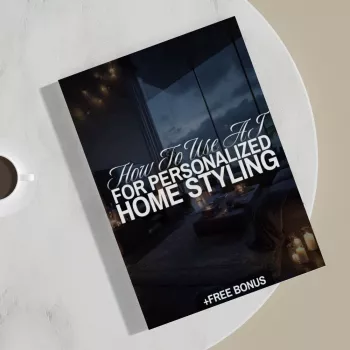
If you want a structured, repeatable process—without second-guessing every generated image—use a framework that moves from inputs to decisions to action. The How to Use AI for Personalized Home Styling | Digital Guide for Modern Home Design, AI-Powered Interior Inspiration & Easy Styling Tips is designed to help turn room photos and measurements into a cohesive modern plan, with quick wins for layout, palette, lighting, and finishing touches.
FAQ
What information improves AI interior design results the most?
Room dimensions, clear daylight photos, a list of items that must stay, and a short set of constraints (budget, rental limits, kids/pets, preferred materials) produce the most realistic and useful suggestions.
How can AI help keep a modern home from feeling cold?
Use AI to explore warmer neutrals, layered lighting, and texture-forward materials (linen, wool, wood, matte ceramics), then refine toward fewer-but-better pieces with soft contrast.
Is AI styling useful if the budget is tight?
Yes—generate options that reuse current furniture, then focus spending on high-impact basics like a properly sized rug, better lighting, cohesive textiles, and smart storage to reduce clutter.










Leave a comment