12V 70W Kids Ride-On Dump Truck: Remote & Rechargeable
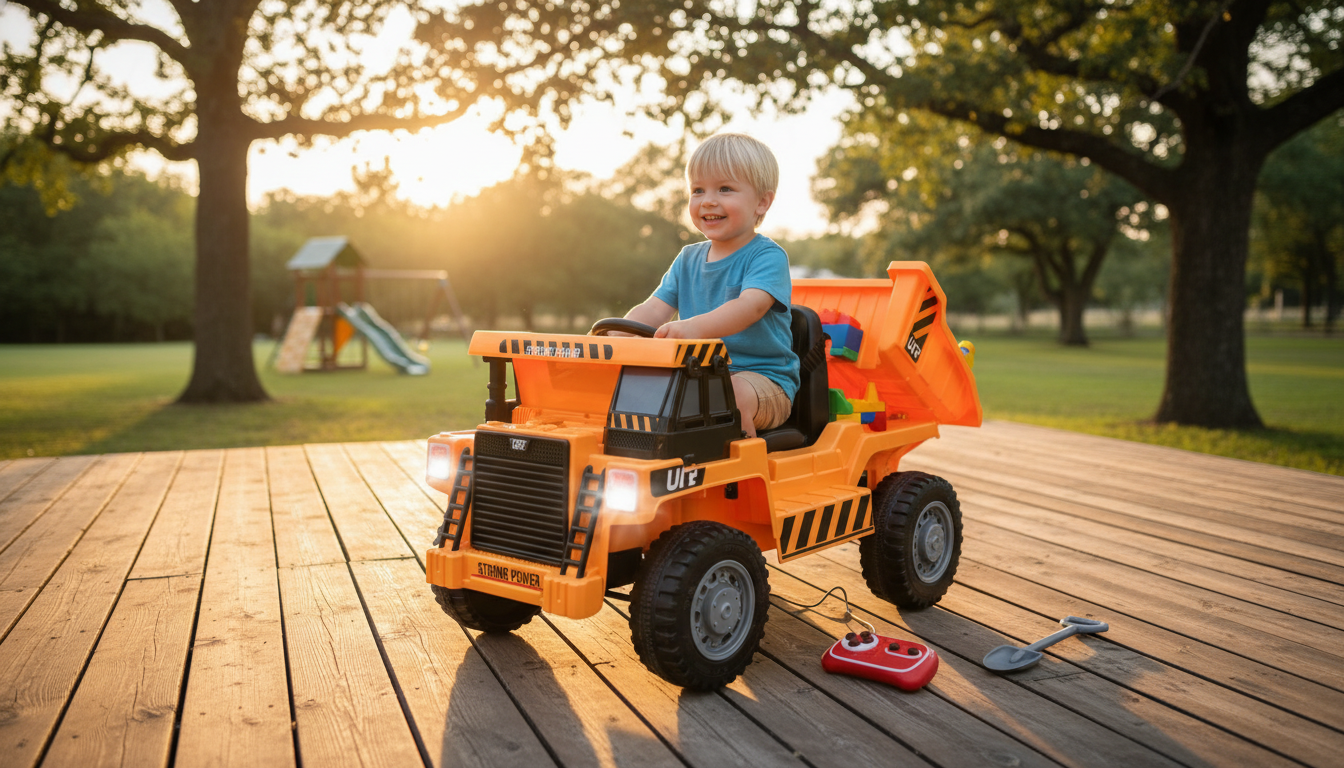
12V 70W Kids Ride-On Dump Truck with Remote Control & Rechargeable Battery
A ride-on dump truck brings construction-themed play to life with powered driving, a “real job” dump-bed routine, and parent-friendly control when kids are still learning. If you’re shopping for a rechargeable, remote-controlled ride-on truck, the details matter: battery voltage, motor output, safety features, and how easy it is to supervise in real backyards and driveways. Below is a practical guide to choosing, setting up, and using a 12V dump truck ride-on in a way that stays fun and manageable day after day.
What Makes a Ride-On Dump Truck Fun (and Practical) for Kids
A dump-truck ride-on is more than a powered toy car—it’s a prop for ongoing play. The construction theme naturally creates “missions” that keep kids engaged longer than many one-and-done toys.
- Construction role-play: hauling toys, “job site” missions, and pretend loading/unloading routines that feel purposeful.
- Motorized independence: kids practice steering, stopping, and judging space—skills that improve with repetition.
- Outdoor-ready play: ride-ons encourage longer sessions outdoors, which is often easier on parents than constant indoor resets.
- Shared play: the dump-truck theme tends to work well with siblings—one drives while another “loads” and “spots” (with clear boundaries).
Key Features to Check Before Buying
Ride-ons can look similar online, but the day-to-day experience often comes down to a few core features. Here’s what to verify before choosing a remote-controlled, rechargeable dump truck.
Battery system (12V rechargeable)
A 12V rechargeable battery is a sweet spot for families who want more sustained play than smaller-voltage models. It also keeps the routine simple: charge, drive, repeat—no disposable batteries to hunt down.
Motor output (70W class)
Higher wattage typically improves takeoff smoothness and helps on mildly uneven surfaces (within the manufacturer’s limits). It won’t turn a ride-on into an off-roader, but it can reduce bogging down during normal backyard use.
Parent remote control and override
The remote is what makes a ride-on workable for younger drivers and busy driveways. Look for responsive steering, simple pairing, and a reliable stop/override so an adult can correct course quickly.
Speed modes
Multiple speeds let you match the environment and the child’s confidence level. Low speed is ideal for first sessions; higher speed can be saved for wide-open areas once turning and stopping are consistent.
Seat, restraint, tires, and dashboard controls
- Seatbelt and comfort: a functional belt and supportive seat help kids stay positioned, especially with jackets or layered clothing.
- Tires and traction: check tread and stability for flat pavement versus short grass; a wider stance generally feels steadier in turns.
- Controls: simple gear selection and predictable pedal response reduce frustration for new drivers.
- Sound and lights: fun extras are best when volume is reasonable and features don’t distract from safe driving.
12V 70W Ride-On Dump Truck: Quick Specs and Shopping Checklist
If you’re ready to compare options, start here: 12V 70W Kids Ride-On Dump Truck with Remote Control & Rechargeable Battery.
At-a-Glance Checklist for a Remote-Controlled Rechargeable Ride-On Dump Truck
| Item to Verify | Why It Matters | What to Look For |
|---|---|---|
| Battery voltage & type | Affects run time and overall power feel | 12V rechargeable pack; clear charging instructions |
| Motor output | Helps with starts and mild inclines (within limits) | Higher wattage vs. low-power models; smooth acceleration |
| Remote control range & override | Parent can stop/steer if the child misjudges space | Dedicated stop button; responsive steering; simple pairing |
| Speed modes | Matches skill level and environment | Low/high speeds; gradual transitions |
| Seatbelt & seating comfort | Improves secure seating and confidence | Functional belt; supportive seat; stable backrest |
| Wheel traction & stability | Reduces slipping and tipping risk | Wide stance; grippy tread; steady turning |
| Weight/age guidance | Prevents strain on motor and improves safety | Manufacturer limits clearly stated |
| Charging time & runtime expectations | Avoids frustration and helps plan play sessions | Reasonable charge window; battery care tips |
Safety and Supervision: Setting Rules That Actually Work
For broader toy-safety guidance, see resources from the U.S. Consumer Product Safety Commission (CPSC) and the American Academy of Pediatrics via HealthyChildren.org.
Battery Care and Charging Habits for Longer Life
Setup and First Ride: A Smooth Start
Play Ideas: Turning the Dump Truck Into a Backyard Project
When a Remote-Controlled Ride-On Dump Truck Is a Good Match
Pair It With an Indoor “Job Site” Corner
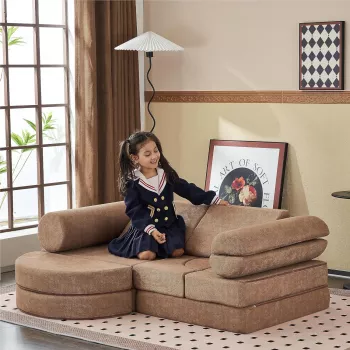
To keep the construction theme going when the weather doesn’t cooperate, an indoor play lounge can become the “planning office” or loading bay. The 14-Piece Modular Kids Couch and Play Set – Luxury Floor Sofa for Toddlers & Adults works well for building a soft corner where kids can stack, climb, and reset their next pretend project.
FAQ
How does the parent remote control help during early rides?
A parent remote lets an adult steer or stop the truck instantly if a child drifts toward obstacles or misjudges a turn. It keeps early sessions calm in tighter spaces and supports a gradual transition from parent driving to full kid control.
How long does a 12V rechargeable ride-on battery typically last per charge?
Many 12V ride-ons run roughly 45–90 minutes per charge depending on speed setting, surface, rider weight, and overall battery condition. Recharging after each session helps keep performance consistent and reduces the chance of deep discharge.
Can a ride-on dump truck drive on grass or small slopes?
Most ride-ons perform best on flat pavement; short, dry grass may be workable, but it can reduce runtime and speed. Avoid steep slopes and always follow the manufacturer’s limits while supervising closely.















Leave a comment